

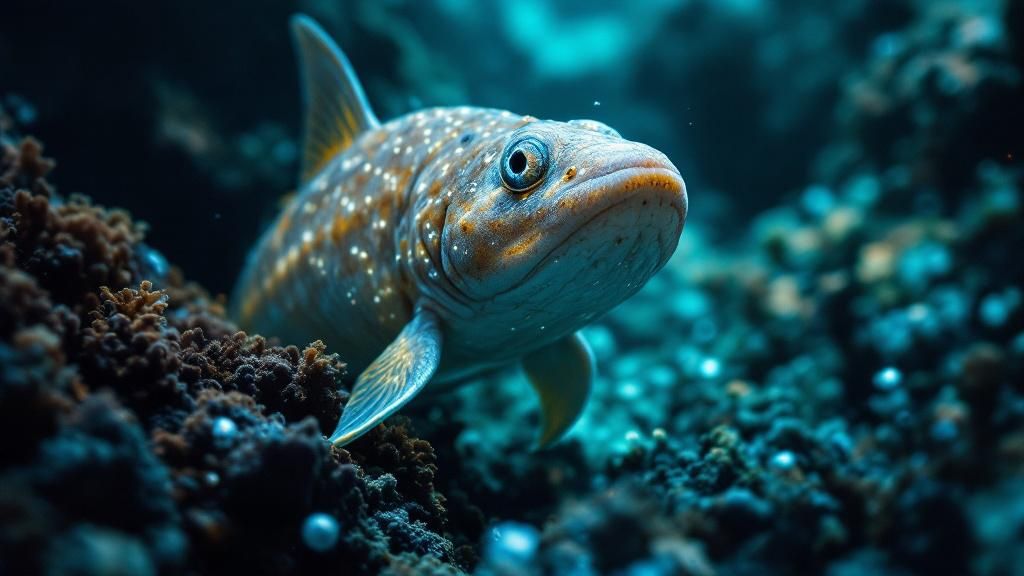
In a groundbreaking discovery that transforms our understanding of life’s limits, global scientific collaborations have identified countless previously unknown species inhabiting the planet’s most profound underwater canyons. These extraordinary creatures, dwelling in extreme pressure conditions and perpetual darkness kilometres beneath the surface, reveal nature’s exceptional potential for adaptation. This article examines the compelling discoveries from expeditions to the world’s most extreme aquatic environments, examining the special traits of these newly discovered creatures and what their existence tells us about the endurance of life in Earth’s most hostile habitats.
Exceptional Discoveries in Profound Regions
The latest expeditions to the deepest ocean trenches have yielded remarkable findings that substantially transform our understanding of biological adaptation. Research teams operating at depths exceeding 10,000 metres have documented species not previously recorded by science, flourishing in conditions that would instantly prove fatal to most land-based creatures. These findings underscore the remarkable resilience of life, demonstrating that evolution has furnished certain creatures with extraordinary physiological mechanisms enabling existence in Earth’s most inhospitable environments.
Among the most striking discoveries are light-producing creatures displaying remarkable luminescent abilities, together with peculiar crustaceans and fish varieties displaying distinctive structural characteristics. Scientists have discovered gelatinous creatures with see-through forms and unusual sensory organs, indicating evolutionary routes radically different from shallow-water counterparts. The diversity and abundance of life at these profound depths challenge previous assumptions about the biological limits of the ocean, prompting researchers to reconsider our comprehension of where complex organisms can thrive.
These findings hold significant implications for our knowledge of life’s essential requirements and boundaries. The newly recognised species display adaptations including specialised proteins performing under extreme pressure, enhanced metabolic efficiency in nutrient-limited environments, and novel genetic manifestations. Their presence provides important understanding into the study of extremophiles, potentially informing future research into life’s prospects beyond Earth and strengthening our recognition for the ocean’s function as a treasure trove of species variety.
Adaptations for Surviving in the Abyss
The recently identified species living in the deepest ocean trenches have developed extraordinary biological mechanisms to withstand conditions that would prove lethal to most terrestrial organisms. These creatures have acquired remarkable physiological adaptations over millions of years, allowing them to thrive where pressure exceeds 1,000 atmospheres and temperatures remain close to freezing. Their survival represents a testament to evolution’s ingenuity in fashioning life forms capable of utilising Earth’s most extreme environments.
Distinctive Biological Traits
One of the most striking adaptations seen in these ocean floor inhabitants is their modified cellular structure, which protects against the immense pressure from damaging vital cellular functions. Their cellular membranes contain specialised lipids that remain flexible despite intense pressure, whilst their proteins have evolved to perform effectively under these challenging circumstances. Additionally, many species possess bigger eyes or glowing organs, allowing them to move about and exchange signals in complete darkness where sunlight never penetrates.
The metabolic mechanisms of these creatures differ fundamentally from their surface-dwelling counterparts, working at considerably slowed rates to preserve energy resources in this energy-limited habitat. Many species display slower growth patterns and prolonged lifespans, reflecting an adaptive approach suited to the stable yet sparse conditions of the abyss. Furthermore, their bone frameworks tend to be lower in mineral content than surface-living creatures, reducing the metabolic burden of maintaining rigid frameworks.
- Specialised proteins withstand extreme pressure conditions effectively
- Bioluminescence enables signalling in complete darkness
- Lower metabolic activity preserve limited available energy
- Flexible cell membranes prevent damage from pressure
- Expanded sensory structures compensate for lack of sunlight
Significance for Ocean Research
The identification of these newly identified species substantially alters our grasp of ecological diversity and biological systems. Scientists now accept that the abyssal trenches represent an vastly uncharted frontier hosting myriad creatures yet to be catalogued. These findings compel the scientific community to re-examine current theories regarding the distribution of species, adaptation mechanisms, and the limits of habitable zones. The ramifications extend further than taxonomy alone, suggesting that the resilience of life substantially outweighs previous estimations and that Earth’s biosphere remains largely unexplored.
Furthermore, these discoveries emphasize the pressing need for strengthened marine preservation programmes and sustained commitment in abyssal exploration equipment. Understanding these deep-sea creatures could yield invaluable insights into the mechanisms of evolution, how organisms adapt genetically, and potential biotechnological applications. As global warming endangers aquatic systems across the planet, documenting and studying these species becomes increasingly critical for safeguarding the world’s natural legacy. The research underscores our obligation to safeguard isolated habitats and the remarkable creatures dwelling within them.
